by Barbara Jane Gray
 Well, not to be distracted by semantics, I asked:
 It enables the use of inferior grain and leaves a poor texture which has to be manipulated to make it react and look like bread. It is also bolstered with chemicals and flavourings to make it visually stimulating and approximate food.
More recently, and especially in smaller retail bakeries, chemical additives are used that both speed up mixing time and reduce necessary fermentation time, so that a batch of bread may be completed in a lot less time that you would credit.
Dough that does not require fermentation because of chemical additives is called "quick bread" by commercial bakers.
Common additives include reducing agents such as L-cysteine or sodium metabisulfite, and oxidants such as potassium bromate or ascorbic acid.
These chemicals are added to dough in the form of a pre-packaged base, which also contains most or all of the dough's non-flour ingredients.
Using such bases and sophisticated chemistry, it has been possible for commercial bakers to make imitations of artisan and sourdough breads."
It enables the use of inferior grain and leaves a poor texture which has to be manipulated to make it react and look like bread. It is also bolstered with chemicals and flavourings to make it visually stimulating and approximate food.
More recently, and especially in smaller retail bakeries, chemical additives are used that both speed up mixing time and reduce necessary fermentation time, so that a batch of bread may be completed in a lot less time that you would credit.
Dough that does not require fermentation because of chemical additives is called "quick bread" by commercial bakers.
Common additives include reducing agents such as L-cysteine or sodium metabisulfite, and oxidants such as potassium bromate or ascorbic acid.
These chemicals are added to dough in the form of a pre-packaged base, which also contains most or all of the dough's non-flour ingredients.
Using such bases and sophisticated chemistry, it has been possible for commercial bakers to make imitations of artisan and sourdough breads."
 rush to go nowhere but I'm sure the rise in chemical breads have contributed to so called gluton
intolerance. That is why I suggest trying homemade bread if you are having trouble eating the
rubbish that is sold in supermarkets."
rush to go nowhere but I'm sure the rise in chemical breads have contributed to so called gluton
intolerance. That is why I suggest trying homemade bread if you are having trouble eating the
rubbish that is sold in supermarkets." 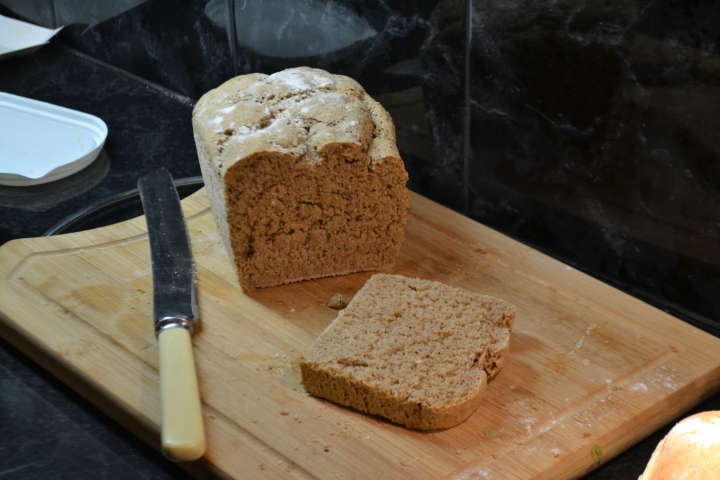 So as the gluton free bread cooled we examined it. It was heavy as it doesn't rise like
real dough and the colour and texture are very different. The taste is.... well, it's not bread but as he says a rough approximation.
So as the gluton free bread cooled we examined it. It was heavy as it doesn't rise like
real dough and the colour and texture are very different. The taste is.... well, it's not bread but as he says a rough approximation.